
01
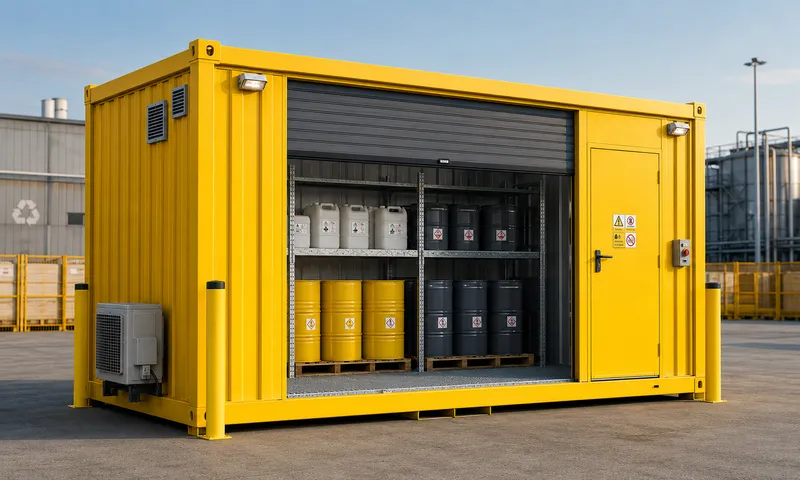
Chemical Waste Container
Project-specific steel systems for controlled, segregated and leak-tight temporary storage of chemical waste.
View Details↗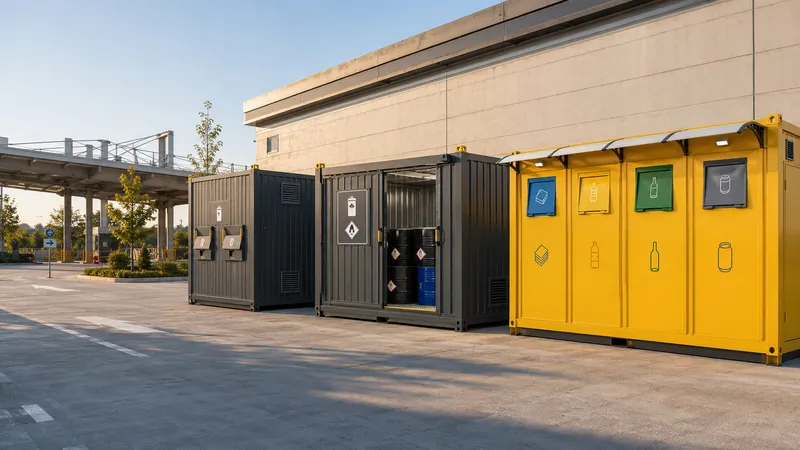
Industrial waste containers engineered around your waste stream, capacity and site conditions.
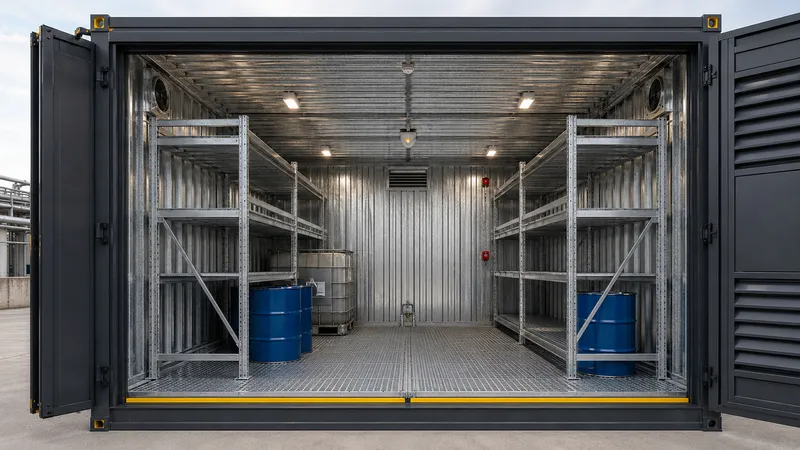
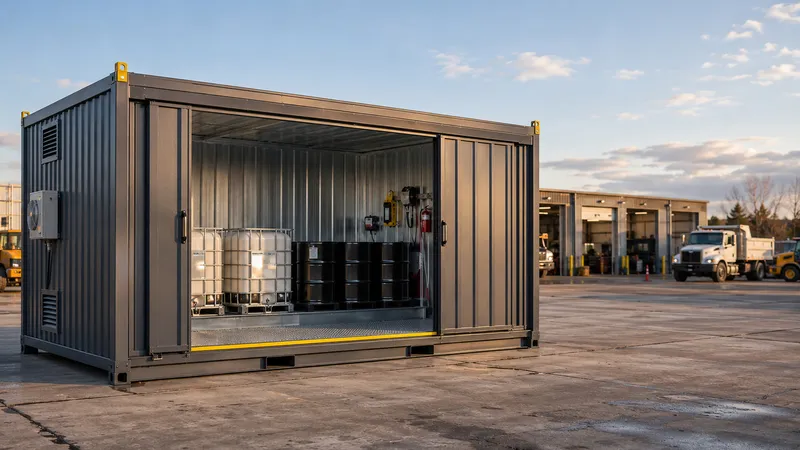
Every project starts with the waste inventory, site conditions, user flow and risk scenario. The result is not just a steel shell, but a measurable safety system.
A solution shaped by the waste stream and operating method—not a generic shell.
Dimensions, equipment, doors, shelves and safety components in one technical brief.
Cleaning, maintenance, access and future capacity are considered during design.
Chemical waste, medical waste, oils and lithium batteries each demand an engineering approach rooted in real operating conditions.
Project-specific steel systems for controlled, segregated and leak-tight temporary storage of chemical waste.
View Details↗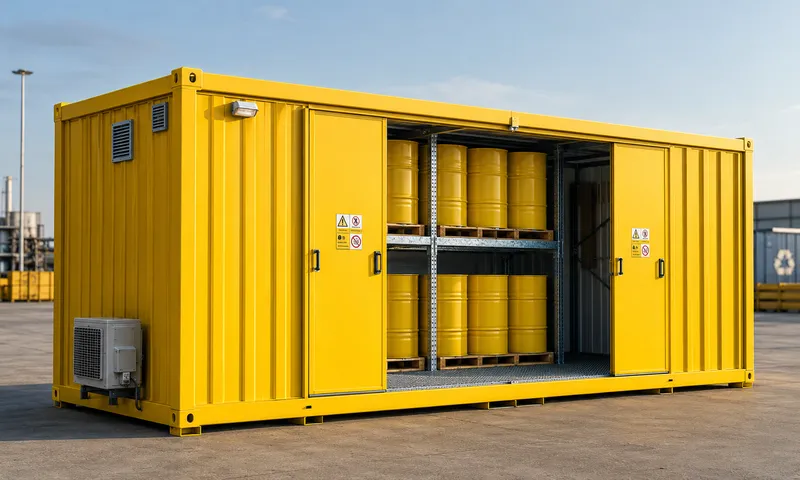
Storage units engineered around fire, ventilation, spill-containment and access risks for each hazardous waste stream.
View Details↗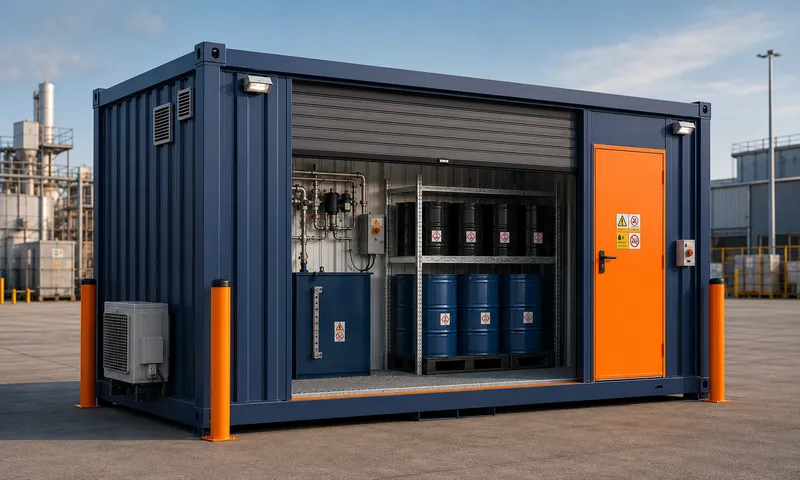
Tank- or drum-based systems that control spill and leakage risks during temporary storage of used mineral oils.
View Details↗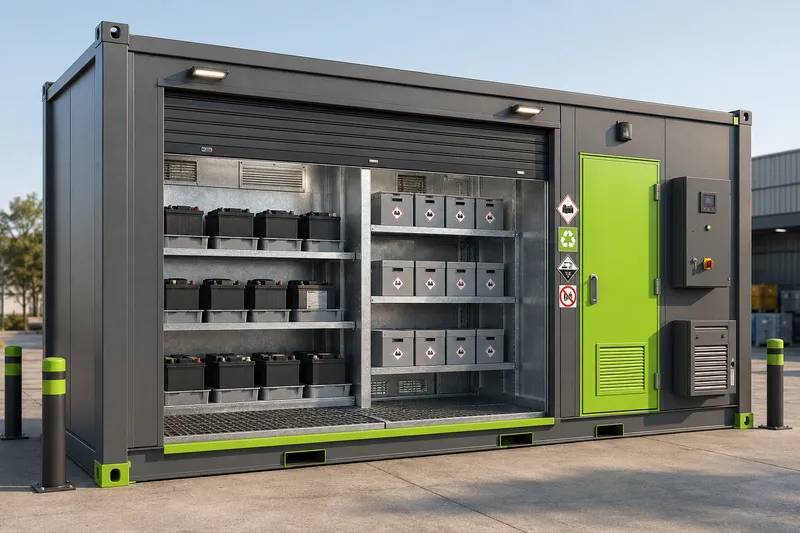
Compartmented safety units engineered around battery chemistry, temperature and fire risk.
View Details↗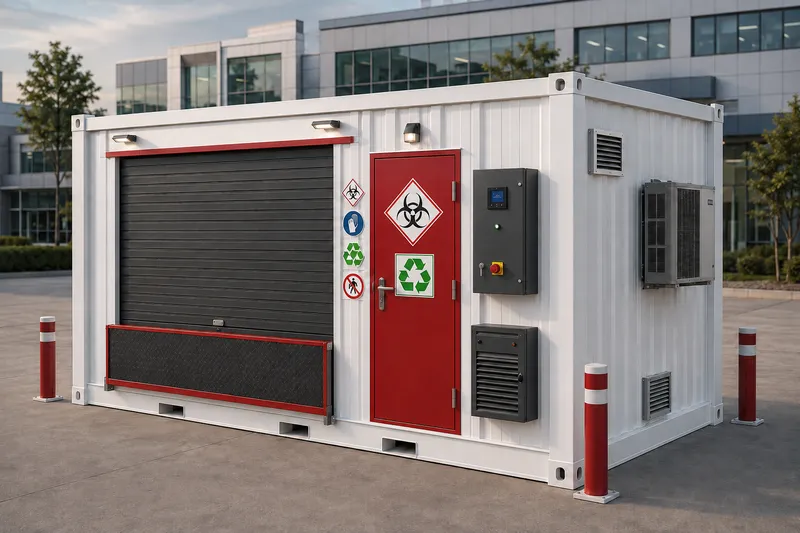
Temporary storage units providing controlled access, cleanable surfaces and optional cooling for healthcare facilities.
View Details↗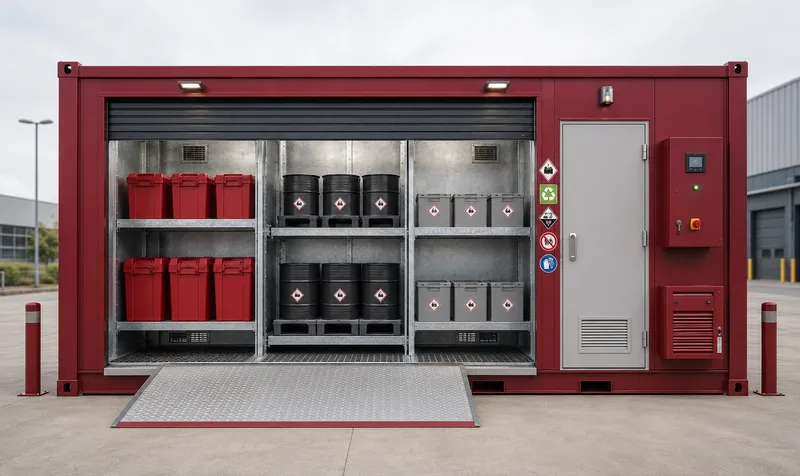
Leak-resistant, ergonomic storage for contaminated packaging, wipes, filters, PPE and equipment residues.
View Details↗A good container starts with the right questions. Waste flow, dimensions, equipment and safety decisions become visible before production.
Waste stream, quantity and operation.
Levels, access, traffic and services.
Layout, safety and equipment.
Controlled production and quality steps.
Function checks and user handover.
From chemical plants and healthcare campuses to ports and residential projects, each waste flow was reconsidered for its setting.
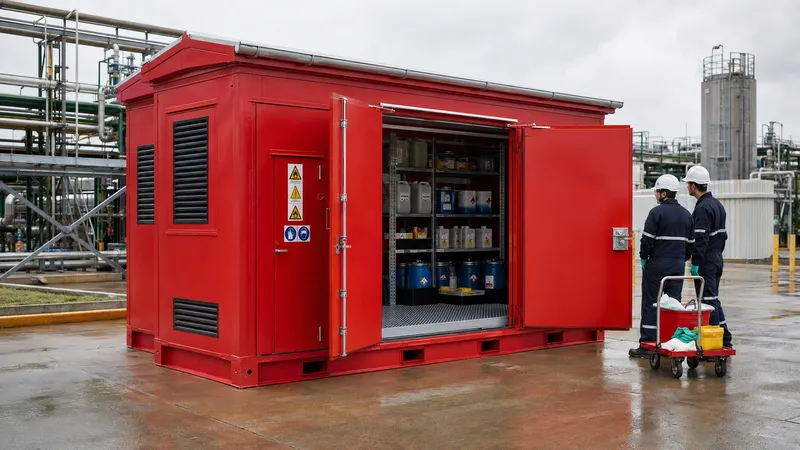
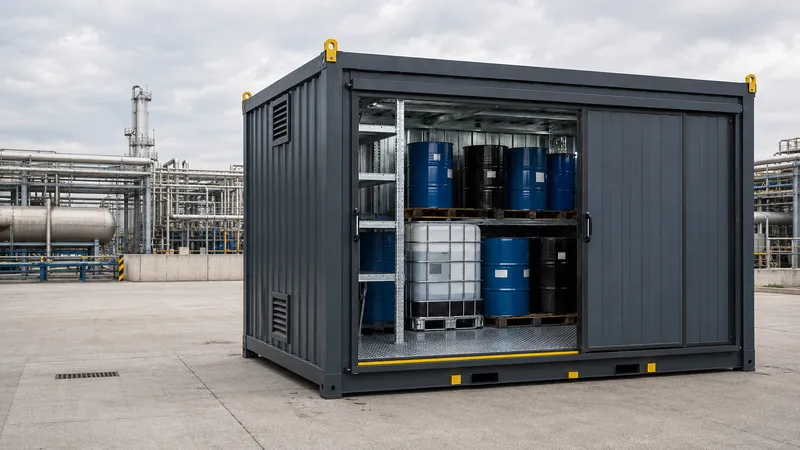
A walk-in, ventilated and fire-resistant waste store with secondary containment was built for a chemical plant. Galvanized grating and individual spill trays support safe segregation of different chemical waste streams.
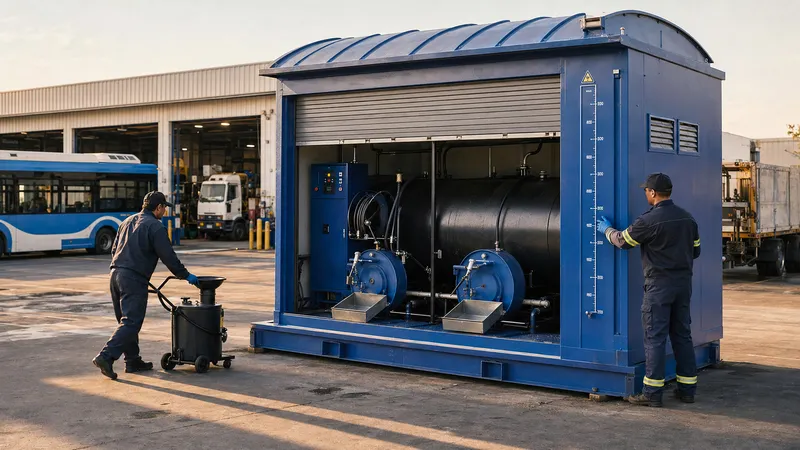
A blue, tank-based transfer station with pump equipment was commissioned for waste oils generated in a fleet maintenance centre. Drip trays, level indication and a hose reel improved control during daily operations.
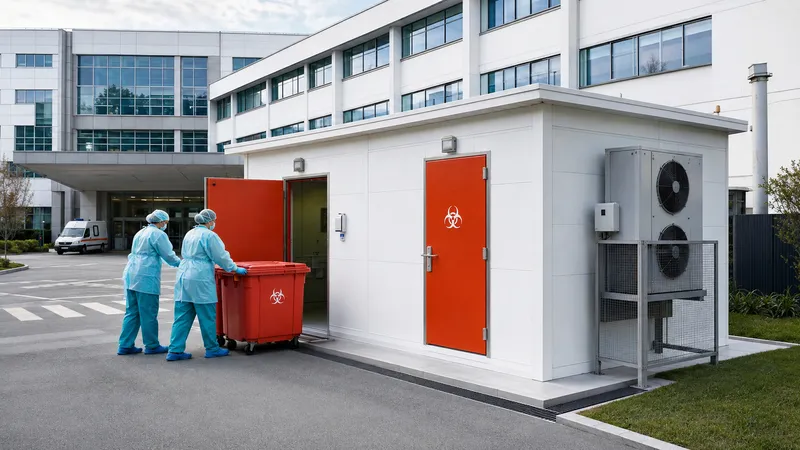
An insulated, washable storage unit with refrigeration was created for a healthcare campus. Controlled doors and enclosed handling equipment support hygienic temporary-storage operations.
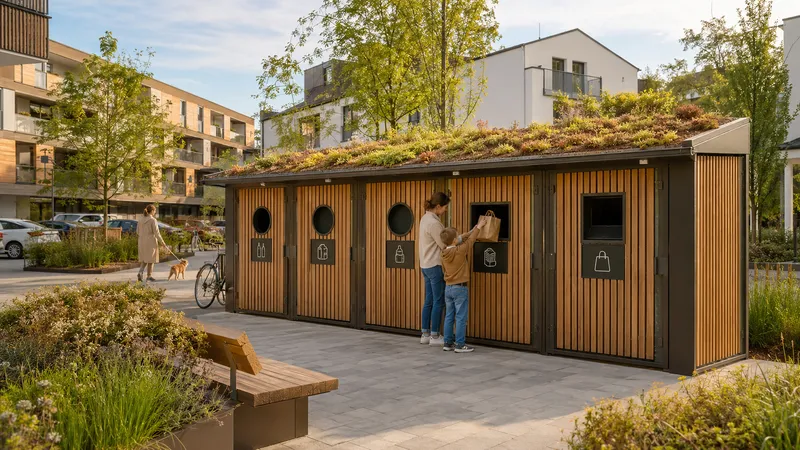
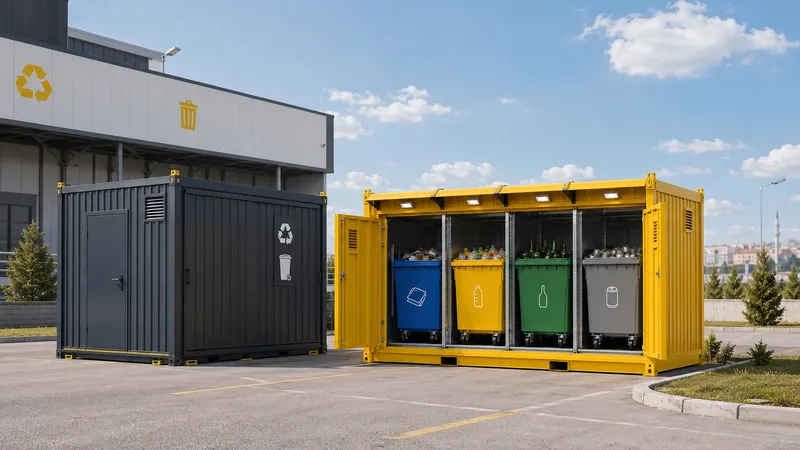
The sorting facility was designed as part of the landscape, with timber cladding and a green roof. Separate apertures make recycling simple and orderly for residents.






Long-form practical guides that clarify project decisions for procurement, environmental and HSE teams.
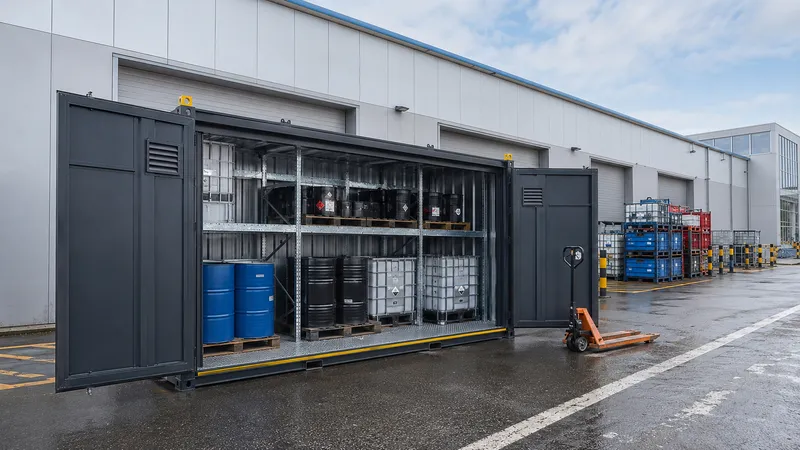
A practical framework covering waste codes, fire scenarios, secondary containment, site layout and every major decision in hazardous-waste container selection.
Read ArticleA practical guide to chemical compatibility groups, secondary containment, ventilation, identification and safe temporary-storage design.
Read ArticleA field guide to tank, drum and IBC arrangements, spill control, pumping, level monitoring and dependable daily operation.
Read ArticleShare the waste stream, quantity and site conditions. Our technical team will help build a clear requirement brief.