Product approachHow is a Hazardous Waste Container engineered?
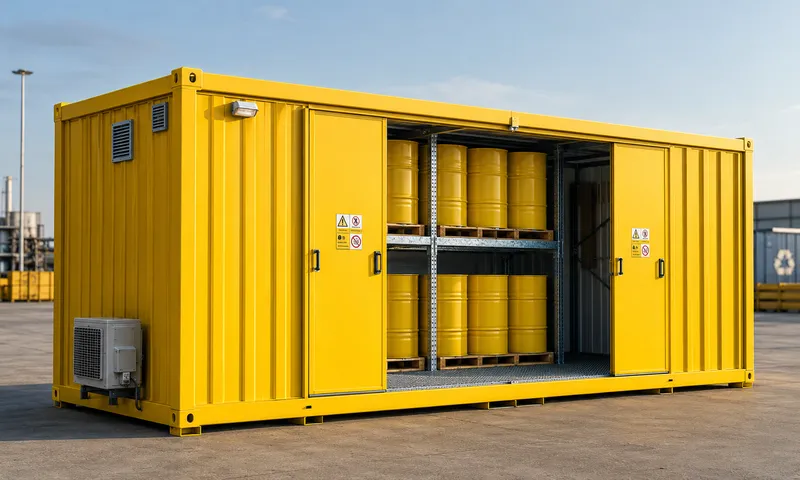
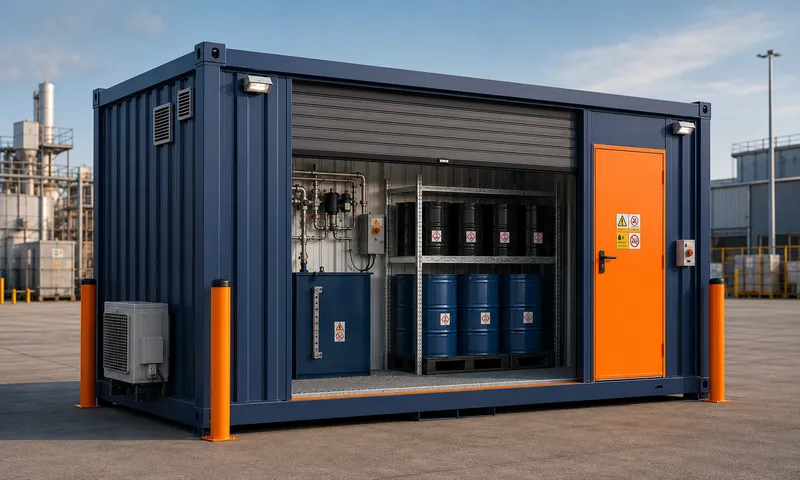
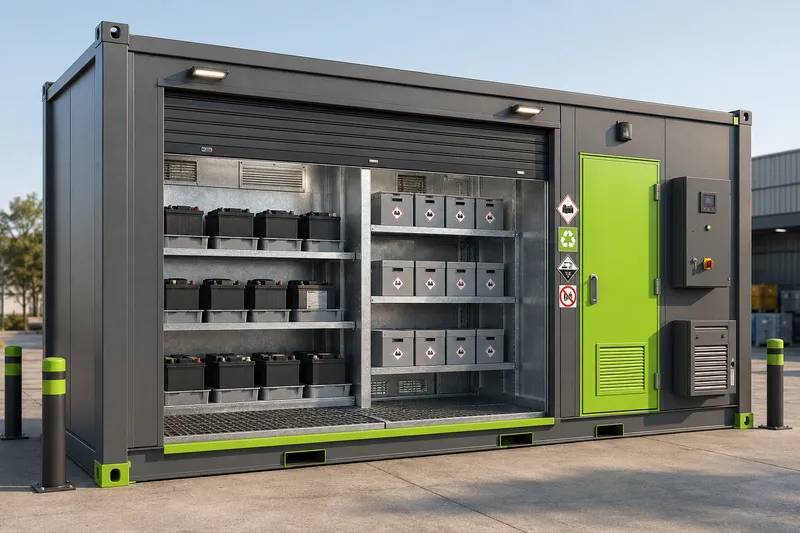
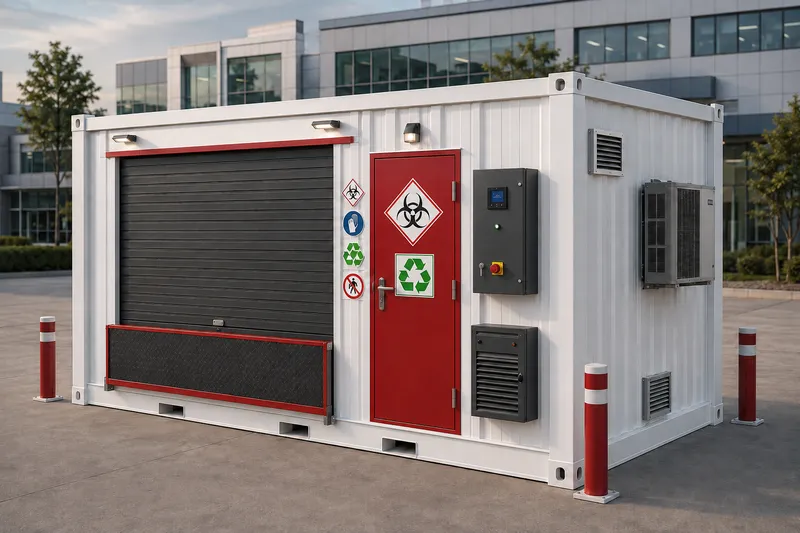
A hazardous waste container cannot be selected by volume alone. Flammability, corrosivity, toxicity and reactivity must be evaluated together with holding time, user traffic and the surrounding site. Pak Atık combines a leak-tight base, shelf trays, controlled ventilation, fire-safety provisions and custom sizing within one coordinated engineering solution.
Final dimensions and equipment are confirmed from the waste inventory, package type, user count, collection frequency, indoor or outdoor exposure and facility risk assessment. The information here describes the general approach; not every option is necessary or suitable for every project.
Key features
- Project-dependent 60–120 minute fire resistance
- Leak-tight floor and shelf-level spill trays
- Natural or explosion-protected mechanical ventilation
- Optional detection and suppression infrastructure
- Controlled access and safety marking
- Assembled or demountable construction
Typical applications
- Industrial manufacturing plants
- Automotive and metal processing
- Chemical stores
- Energy facilities
- Temporary hazardous-waste storage areas
Decisions that shape the specification
First define accepted waste streams and incompatibilities. Then establish capacity, shelving and aisle layout. Spill, fire, temperature, ventilation, access and cleaning needs are tested on the arrangement. Where electrical or active safety equipment is required, classification and maintenance access become part of the scope.
At quotation stage, share waste type, average and peak quantity, package dimensions, site photographs, available footprint, collection interval and existing services. If data is incomplete, assumptions should be written clearly and confirmed before production.
Technical note: Product performance and safety equipment must be determined through the site-specific risk assessment and current regulatory and technical requirements.