Product approachHow is a Waste Battery Container engineered?
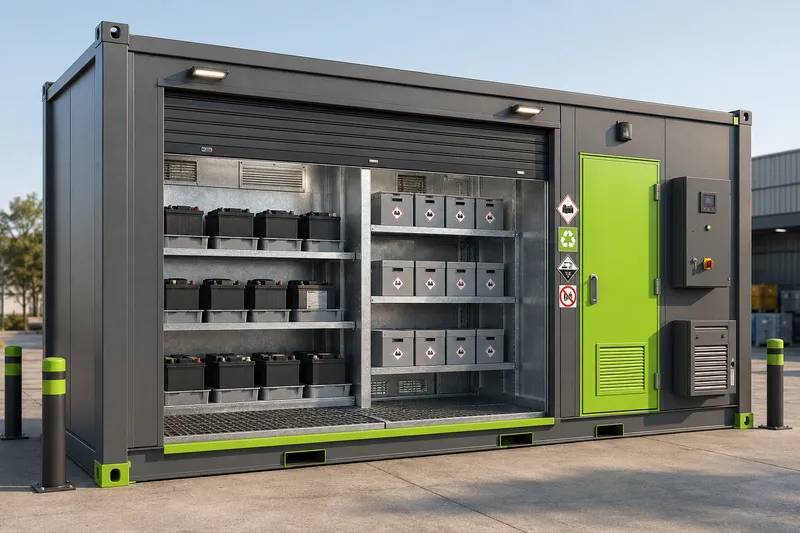
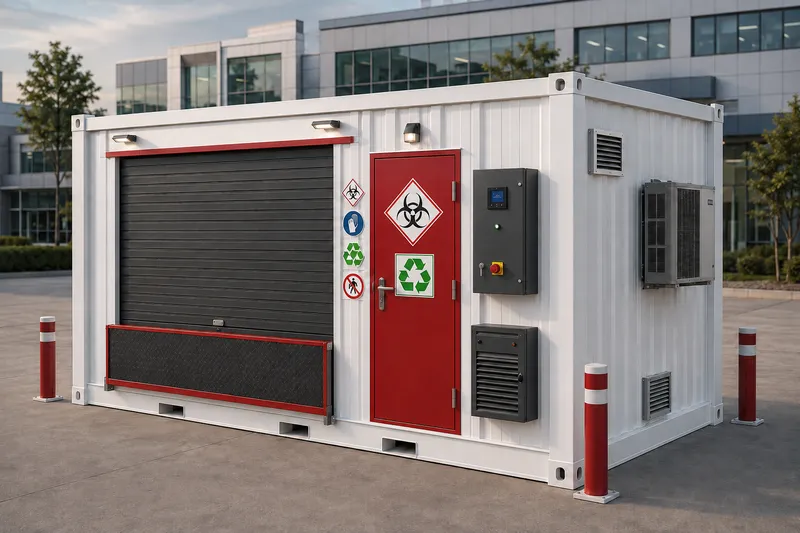
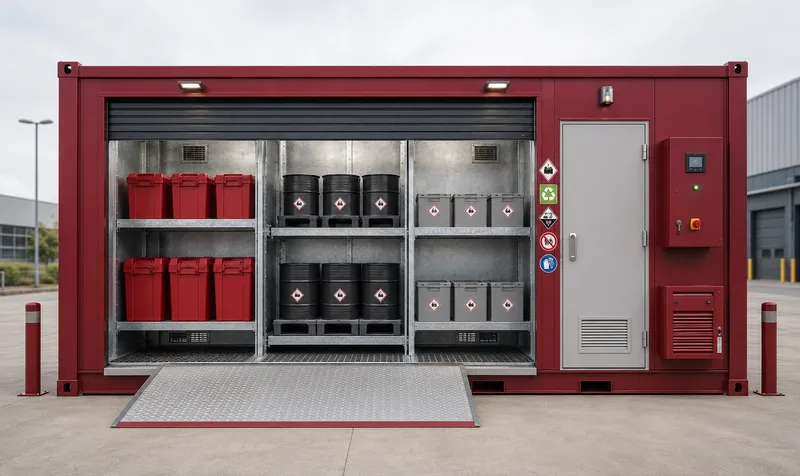
End-of-life batteries present different risks depending on chemistry and physical condition. The receiving scenario, segregated compartments, leak control, temperature monitoring, ventilation and appropriate fire-safety infrastructure must therefore be designed as one system. A dedicated quarantine arrangement can be added for damaged or suspect batteries.
Final dimensions and equipment are confirmed from the waste inventory, package type, user count, collection frequency, indoor or outdoor exposure and facility risk assessment. The information here describes the general approach; not every option is necessary or suitable for every project.
Key features
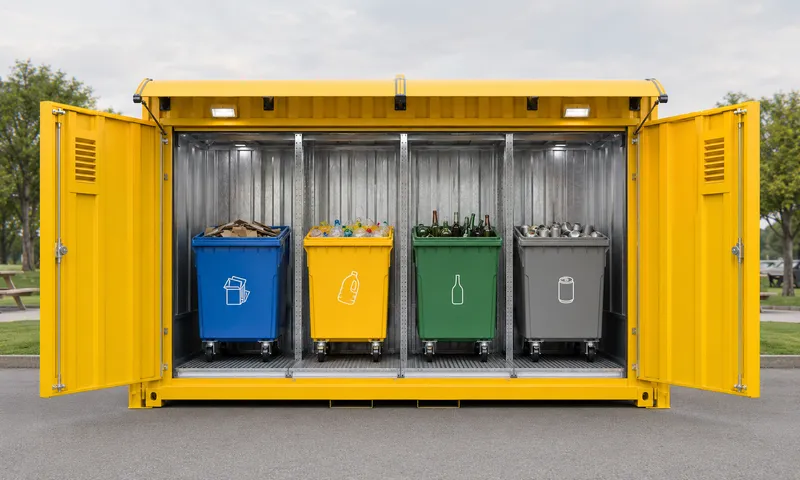
- Separate compartments by battery chemistry
- Temperature monitoring and alarm infrastructure
- Leak-tight shelving and spill trays
- Controlled ventilation
- Optional detection and suppression
- Quarantine zone for damaged batteries
Typical applications
- Automotive and electric-vehicle plants
- Energy storage facilities
- Battery sales and service points
- Recycling plants
- University and technology campuses
Decisions that shape the specification
First define accepted waste streams and incompatibilities. Then establish capacity, shelving and aisle layout. Spill, fire, temperature, ventilation, access and cleaning needs are tested on the arrangement. Where electrical or active safety equipment is required, classification and maintenance access become part of the scope.
At quotation stage, share waste type, average and peak quantity, package dimensions, site photographs, available footprint, collection interval and existing services. If data is incomplete, assumptions should be written clearly and confirmed before production.
Technical note: Product performance and safety equipment must be determined through the site-specific risk assessment and current regulatory and technical requirements.