Product approachHow is a Waste Oil Container engineered?
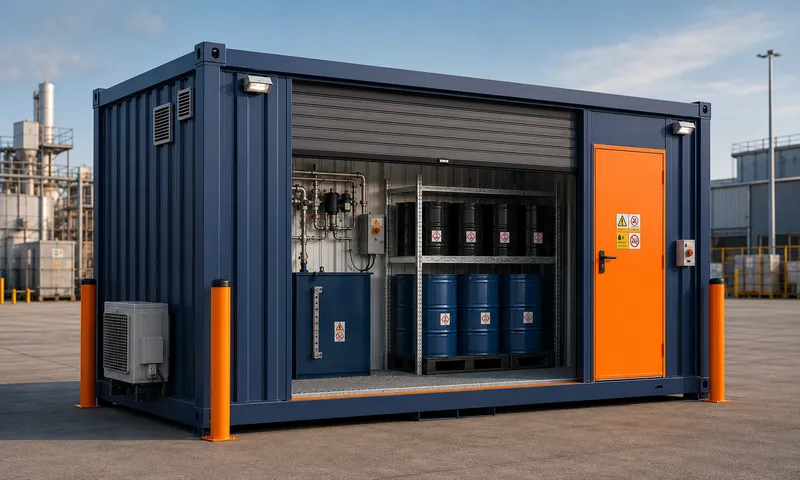
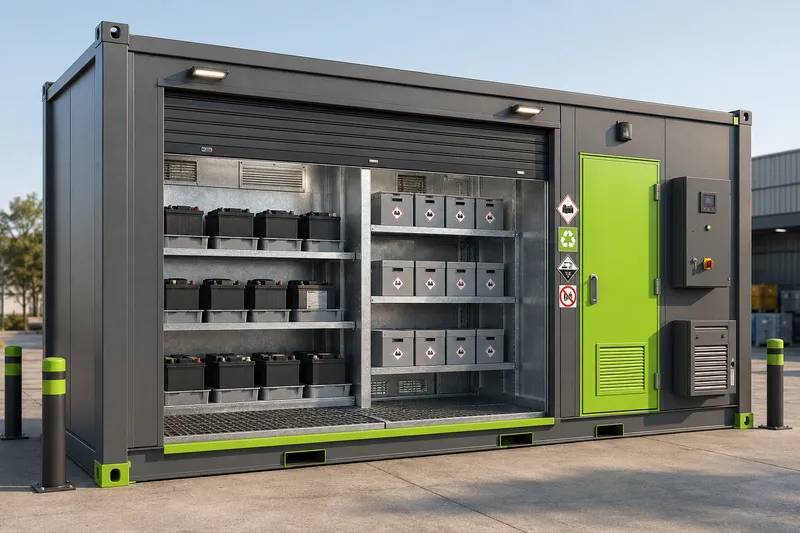
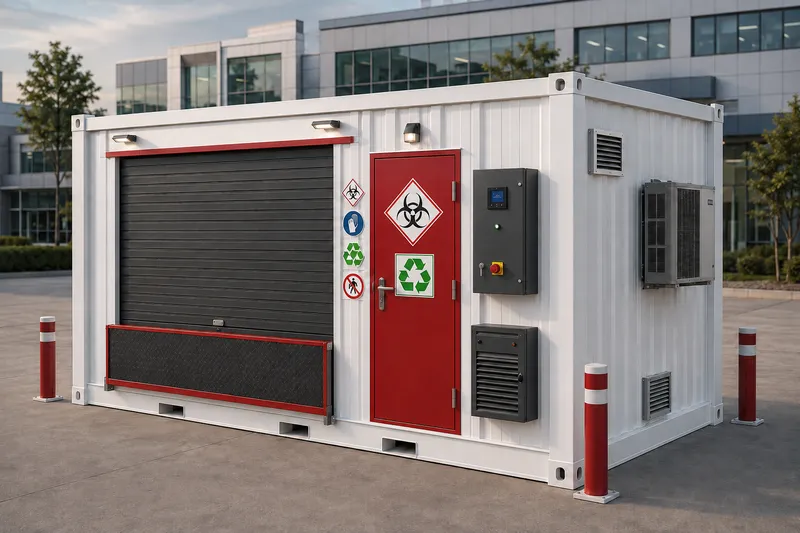
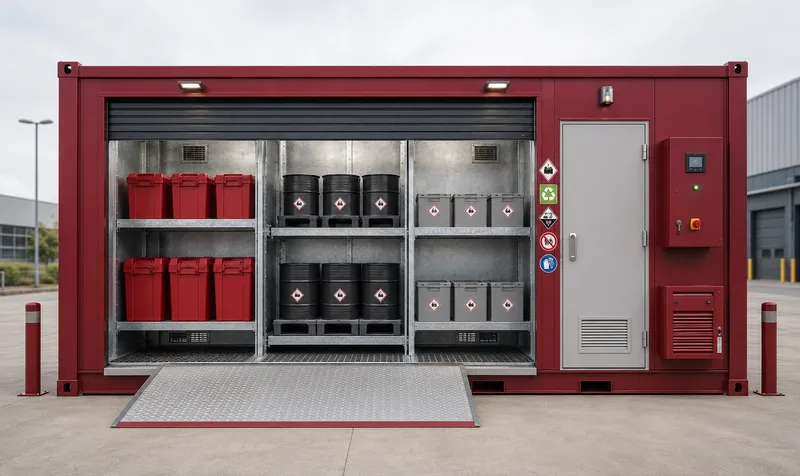
Waste oil containers support the separate accumulation of oils generated by maintenance and production activities. Secondary containment, drip trays, level monitoring, pump and hose equipment, ventilation and controlled access are coordinated around tank, drum or IBC layouts.
Final dimensions and equipment are confirmed from the waste inventory, package type, user count, collection frequency, indoor or outdoor exposure and facility risk assessment. The information here describes the general approach; not every option is necessary or suitable for every project.
Key features
- Tank, drum or IBC-compatible layouts
- Leak-tight secondary containment base
- Pump, hose reel and filling funnel options
- Level-monitoring infrastructure
- Weather-resistant steel enclosure
- Custom capacity and dimensions
Typical applications
- Fleet maintenance centres
- Automotive service operations
- Machinery manufacturing
- Port and shipyard maintenance areas
- Industrial oil storage zones
Decisions that shape the specification
First define accepted waste streams and incompatibilities. Then establish capacity, shelving and aisle layout. Spill, fire, temperature, ventilation, access and cleaning needs are tested on the arrangement. Where electrical or active safety equipment is required, classification and maintenance access become part of the scope.
At quotation stage, share waste type, average and peak quantity, package dimensions, site photographs, available footprint, collection interval and existing services. If data is incomplete, assumptions should be written clearly and confirmed before production.
Technical note: Product performance and safety equipment must be determined through the site-specific risk assessment and current regulatory and technical requirements.